Keyword cannibalization silently erodes search visibility by forcing multiple pages to compete for the same query and intent. We eliminate this conflict by consolidating authority, clarifying intent signals, and structuring content with precision. This guide delivers a complete, execution-ready framework to identify, fix, and prevent cannibalization at scale.
What Is Keyword Cannibalization (And Why It Destroys Rankings)
Keyword cannibalization occurs when two or more URLs on the same domain target identical or closely related keywords with overlapping intent. Instead of strengthening relevance, these pages divide ranking signals – resulting in weaker visibility, unstable rankings, and reduced click-through rates.
Core impact:
- Authority dilution across multiple URLs
- Rank volatility due to conflicting signals
- Lower CTR from mismatched page intent
- Reduced conversion potential
When search engines cannot determine the most relevant page, none of them achieves optimal ranking performance.
Identifying Keyword Cannibalization with Precision
1. Google Site Search Analysis
Run a targeted query:
site:yourdomain.com "target keyword"
If multiple pages appear with similar intent, you have a cannibalization issue.
2. Search Console Query-Level Diagnosis
- Navigate to Performance → Search Results
- Filter by a target query
- Switch to the Pages tab
If multiple URLs receive impressions for the same query, they are competing.
3. SEO Platform Conflict Detection
Use advanced tools to surface overlap patterns:
- Competing URLs ranking for identical keywords
- Rank swapping behavior between pages
- Fragmented impressions across multiple URLs
These signals confirm cannibalization at scale.
4. Build a Keyword Mapping System
A structured keyword map eliminates ambiguity and ensures one primary keyword per URL.
| Keyword |
Intent |
Page URL |
Status |
| SEO tools |
Commercial |
/seo-tools-guide |
Primary |
| SEO tools free |
Informational |
/free-seo-tools |
Supporting |
This becomes the single source of truth for content planning.

Root Causes of Keyword Cannibalization
1. Overlapping Content Expansion
Creating multiple articles around very similar topics can confuse search engines about which page should rank for a specific query. Instead of strengthening authority, the pages begin competing with each other, reducing overall SEO performance.
2. Duplicate Keyword Targeting
When several pages are optimized for the same keyword without a clear strategy, search engines struggle to determine the most relevant result. This often causes rankings to fluctuate or prevents any single page from performing strongly.
3. Weak Internal Linking Structure
Internal links help search engines understand which page is most important for a topic. Without consistent anchor text and proper linking hierarchy, authority gets distributed across multiple pages instead of supporting one primary page.
4. Blog vs. Product Page Conflict
A blog post and a product or service page targeting the same keyword can create search intent confusion. Search engines may not know whether users want informational content or a conversion-focused page, which can weaken rankings for both.
Check this out: What is Commodity Content and why it is Dying in 2026
The Most Effective Methods to Fix Keyword Cannibalization
1. Consolidate Competing Pages into a Single Authority Asset
Merge overlapping content into one comprehensive page:
- Combine high-performing sections
- Remove redundancy
- Expand depth and coverage
Then implement:
301 Redirect → Old URLs → Primary URL
This consolidates ranking signals and strengthens authority.
2. Reoptimize Pages Around Distinct Search Intent
If merging is not viable, redefine each page’s role:
- Informational vs. transactional
- Beginner vs. advanced
- Comparison vs. tutorial
Each page must target a unique intent, not just a variation of the same keyword.
3. Strengthen On-Page SEO Signals
For the primary page:
- Align title with core keyword intent
- Optimize headings for clarity and hierarchy
- Ensure immediate query resolution in the introduction
- Remove mixed or conflicting intent from content
Clarity wins rankings.
4. Strategic Internal Linking Reinforcement
Use internal links to signal authority:
- Link supporting pages → primary page
- Use consistent, keyword-rich anchor text
- Update legacy content to reinforce hierarchy
This builds a clear ranking pathway.
5. Deploy Canonical Tags for Controlled Duplication
When multiple similar pages must exist:
rel="canonical" → Primary URL
Use this for:
- Filtered product variations
- Location-based pages
- Campaign landing pages
This consolidates indexing signals without removing pages.
Advanced Cannibalization Prevention Framework
1. Intent-First Content Architecture
Every page must serve a distinct purpose:
- One keyword
- One intent
- One definitive answer
Avoid creating multiple pages answering the same query.
2. Topic Cluster Model for Scalable Growth
Structure content as:
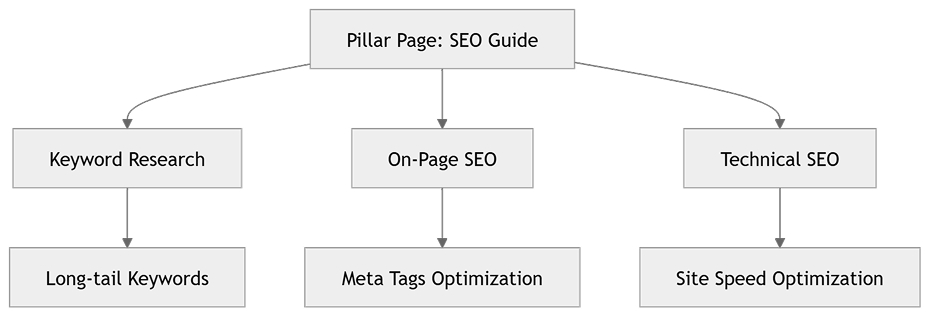
How it works:
- Pillar page targets broad keyword
- Supporting pages target subtopics
- Internal links reinforce hierarchy
This eliminates overlap while expanding topical authority.
3. Continuous Content Audits
Audit content quarterly:
- Identify duplicate keyword targeting
- Remove outdated or redundant pages
- Consolidate weak performers
Every audit should answer:
Do we have a single best page for each intent?
4. Performance Monitoring Signals
Track these warning signs:
- Ranking fluctuations between pages
- Declining CTR despite stable rankings
- Traffic drops after publishing new content
These indicate emerging cannibalization issues.

When to Merge vs. When to Differentiate
| Scenario |
Action |
| Same keyword + same intent |
Merge + 301 redirect |
| Same keyword + different intent |
Reoptimize separately |
| Similar content but required duplication |
Use canonical |
| Weak overlapping pages |
Consolidate into one |
Keyword Cannibalization vs. Keyword Stuffing
| Factor |
Cannibalization |
Stuffing |
| Scope |
Multiple pages |
Single page |
| Issue |
Competing URLs |
Over-optimization |
| Impact |
Ranking dilution |
Spam signals |
Both reduce performance, but cannibalization is structural, not density-based.
High-Performance Content Structure to Avoid Cannibalization
1. Clear Keyword Targeting
Each page should focus on one primary keyword along with closely related secondary keywords. This helps search engines clearly understand the page topic and prevents multiple pages from competing for the same query.
2. Defined Search Intent
Before creating content, identify whether the user intent is informational, transactional, navigational, or commercial. Matching the correct intent ensures the right page ranks for the right audience search.
3. Unique Value Proposition
Every page should provide distinct information, perspectives, or solutions that differ from existing content on your website. Unique content strengthens topical authority and reduces overlap between pages.
4. Strategic Internal Linking
Use internal links to guide search engines toward the most important page for a keyword topic. Consistent anchor text and logical linking structures help consolidate authority and improve crawl understanding.
5. No Overlap With Existing Pages
Always audit current content before publishing new pages. If a similar page already exists, update or expand the existing content instead of creating another competing URL.
Final Execution Strategy
A strong SEO strategy starts with clarity and structure. By assigning a single keyword intent to each page, consolidating competing content, and strengthening authority through internal linking and pillar-based architecture, websites can avoid keyword cannibalization and improve overall search performance. Consistent content audits and optimization help maintain relevance as your site grows. When every page serves a clear purpose within your SEO ecosystem, rankings become more stable, organic visibility increases, and long-term traffic growth becomes more sustainable.
Resolve Keyword Cannibalization & Improve Rankings
Keyword cannibalization can silently reduce your website’s search performance, traffic, and conversions if left unresolved. A well-structured SEO strategy with clear keyword targeting, optimized internal linking, and intent-focused content architecture is essential for long-term ranking stability.
InCreativeWeb is a results-driven digital marketing and SEO agency in Surat, helping businesses improve search visibility through advanced SEO audits, content optimization, and technical SEO strategies. Contact us for more professional SEO solutions, website growth strategies, and performance-focused digital marketing services.
FAQs
1. What is keyword cannibalization in SEO?
Keyword cannibalization happens when multiple pages on the same website target the same or very similar keywords and search intent. This creates internal competition, making it difficult for search engines to determine which page should rank higher.
2. Why is keyword cannibalization harmful for search rankings?
Cannibalization divides ranking authority, backlinks, and user engagement across multiple URLs. As a result, rankings may fluctuate, click-through rates can decrease, and overall organic visibility may weaken.
3. How can I identify keyword cannibalization on my website?
You can identify cannibalization using Google Search Console, SEO audit tools, or manual site searches. If multiple pages receive impressions or rankings for the same keyword, there is likely a cannibalization issue.
4. What is the best way to fix keyword cannibalization?
The most effective solution depends on the situation. Common fixes include merging overlapping pages, implementing 301 redirects, optimizing pages for different search intents, strengthening internal linking, or using canonical tags.
5. Should I delete duplicate or competing pages?
Not always. If the pages serve the same intent and provide similar information, merging them is usually the best option. However, if the pages target different audiences or intents, they should be reoptimized instead of removed.
6. How do internal links help prevent keyword cannibalization?
Internal links help search engines understand which page is the primary authority for a topic. Using consistent anchor text and linking supporting pages to the main page strengthens ranking signals and reduces confusion.
7. Can blog posts and service pages cannibalize each other?
Yes. If a blog post and a service page target the same keyword and intent, search engines may struggle to determine which page should rank. This can weaken the performance of both pages.
Author
Jayesh Patel
Jayesh Patel is a Professional Web Developer & Designer and the Founder of InCreativeWeb.
As a highly Creative Web/Graphic/UI Designer - Front End / PHP / WordPress / Shopify Developer, with 14+ years of experience, he also provide complete solution from SEO to Digital Marketing. The passion he has for his work, his dedication, and ability to make quick, decisive decisions set him apart from the rest.
His first priority is to create a website with Complete SEO + Speed Up + WordPress Security Code of standards.