Businesses today are under constant pressure to improve efficiency, reduce operational costs and deliver faster, more personalized customer experiences. Traditional automation tools have helped streamline repetitive processes, but modern organizations increasingly require systems capable of reasoning, learning and acting independently. This is where AI agent development becomes a game changer.
AI agents are transforming how businesses handle customer interactions, automate workflows, analyze data and make operational decisions. Unlike traditional software systems that follow fixed instructions, AI agents can understand context, adapt to changing conditions and perform multi-step tasks with minimal human involvement.
Whether it’s assisting customer support teams, optimizing internal operations, or automating complex business workflows, AI agents are rapidly becoming an essential part of digital transformation strategies.
In this guide, we’ll explore what AI agents are, how they work, the different types of AI agents, their benefits and the step-by-step process of AI agent development.
What Are AI Agents?
AI agents are intelligent software systems designed to perform tasks autonomously by analyzing information, making decisions and taking action based on predefined goals.
Unlike conventional automation tools that simply execute programmed commands, AI agents can process context, adapt to new situations and improve their performance over time.
Think of an AI agent as a digital assistant capable of understanding a problem, evaluating possible solutions and executing actions to achieve a desired outcome.
Key Characteristics of AI Agents
1. Goal-Oriented Decision Making
AI agents are designed to achieve specific objectives. Instead of following rigid workflows, they evaluate different paths to accomplish tasks efficiently.
2. Context Awareness
Modern AI agents understand contextual information, enabling them to provide relevant responses and smarter recommendations.
3. Continuous Learning
Many AI systems improve through data analysis and user interactions, making them more effective over time.
4. Multi-Step Task Execution
AI agents can perform complex workflows involving multiple stages instead of handling only isolated actions.
Real-World Uses of AI Agents
Businesses across industries are using AI agents for:
- Customer support automation
- Lead qualification and sales assistance
- IT monitoring and troubleshooting
- Workflow optimization
- Employee productivity support
- Data analysis and reporting
For example, an AI-powered support system can identify customer issues, suggest solutions, escalate priority tickets and follow up automatically, all without manual intervention.
Check this out: AI-Powered Web Development Services: What’s Possible Today
AI Agents vs Traditional Chatbots: What’s the Difference?
Many people assume AI agents and chatbots are the same, but they differ significantly in capabilities.
Traditional chatbots primarily follow predefined scripts and answer simple queries. AI agents, however, are capable of intelligent reasoning and task execution.
| Feature |
Traditional Chatbots |
AI Agents |
| Responses |
Rule-based |
Context-aware |
| Decision Making |
Limited |
Intelligent |
| Learning Ability |
Minimal |
Adaptive |
| Task Handling |
Single-step |
Multi-step |
| Personalization |
Basic |
Advanced |
For instance, a traditional chatbot may answer frequently asked questions, while an AI agent can understand a customer’s request, analyze account information, recommend solutions and initiate follow-up actions.
Businesses dealing with complex workflows and customer personalization often benefit more from AI agents than traditional chat systems.
How Do AI Agents Work?
Understanding how AI agents work helps organizations better plan their implementation strategies.
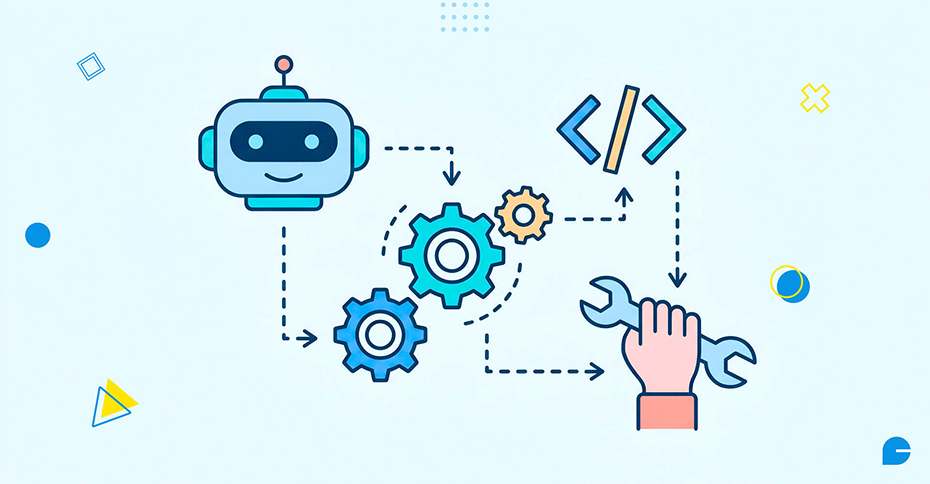
AI agents generally operate through four core stages.
1. Data Collection
AI agents gather information from multiple sources such as:
- User inputs
- Business systems
- APIs
- Databases
- Historical interactions
The more relevant and structured the data, the more accurate the AI agent becomes.
2. Context Analysis and Decision Making
Once data is collected, the AI agent analyzes the information to understand intent, identify patterns and determine the most appropriate action.
For example, if a customer reports an issue with delayed delivery, the AI agent may review shipping data, identify the problem and suggest a resolution.
3. Task Execution
After making a decision, the AI agent performs actions such as:
- Sending responses
- Updating records
- Triggering workflows
- Assigning tasks
- Generating reports
4. Continuous Learning
Advanced AI agents learn from user feedback and system outcomes, helping improve accuracy and efficiency over time.
This ability to learn is one of the key reasons businesses invest in AI agent development.
Different Types of AI Agents
AI agents vary based on complexity, learning capability and functionality.
1. Rule-Based AI Agents
These agents operate using predefined logic and instructions. They work well for repetitive tasks and predictable workflows.
Best for: Appointment scheduling, FAQs, reminders.
2. Context-Aware AI Agents
These agents remember past interactions and use historical context to improve responses.
Best for: Personalized customer experiences and recommendations.
3. Goal-Oriented AI Agents
Goal-based agents are built to achieve specific objectives by evaluating multiple actions.
Best for: Workflow automation and task completion.
4. Decision-Based AI Agents
These agents analyze different outcomes before making decisions.
Best for: Financial forecasting, inventory planning and operational optimization.
5. Self-Learning AI Agents
Powered by machine learning, these agents continuously improve based on performance data.
Best for: Fraud detection, predictive analytics and behavior analysis.
6. Multi-Agent Systems
These systems involve multiple AI agents working together to accomplish larger tasks.
Best for: Supply chain management and enterprise-level automation.
What Is AI Agent Development?
AI agent development is the process of designing, building, training and deploying intelligent systems capable of performing autonomous tasks.
It involves combining artificial intelligence technologies, automation frameworks and data systems to create agents that can think, reason and act independently.
1. Technologies Used in AI Agent Development
Several technologies power AI agents:
- Machine Learning (ML): Allows agents to learn from patterns and improve performance.
- Natural Language Processing (NLP): Helps agents understand and interpret human language.
- Large Language Models (LLMs): Enable advanced conversational intelligence and contextual understanding.
- APIs and Integrations: Allow AI agents to communicate with external platforms and systems.
- Workflow Automation Tools: Support process orchestration and task execution.
2. Core Components of an AI Agent
A successful AI agent often includes:
- Data input layer
- Decision-making engine
- Memory system
- Action execution layer
- Monitoring and reporting tools
Why Businesses Are Investing in AI Agent Development
- Increased Efficiency: AI agents reduce repetitive workloads and improve operational speed, allowing employees to focus on higher-value tasks.
- Better Customer Experiences: Businesses can provide faster support, personalized recommendations and consistent communication.
- Smarter Decision Making: AI agents analyze large volumes of information and deliver actionable insights.
- Cost Reduction: Automating manual tasks helps reduce operational expenses and improve productivity.
- Scalability: Unlike human teams, AI agents can handle thousands of interactions simultaneously without performance issues.
Step-by-Step Process to Build an AI Agent
Step 1: Identify the Problem
Clearly define the business challenge the AI agent will solve.
Questions to ask:
- What process needs automation?
- What outcome is expected?
- Who will use the system?
Step 2: Choose the Right Type of AI Agent
Select an agent model based on business requirements and complexity.
Step 3: Gather High-Quality Data
AI performance depends heavily on data quality. Ensure data is accurate, clean and relevant.
Step 4: Select the Right AI Model
Choose technologies that align with your goals, such as language models or predictive systems.
Step 5: Design the Workflow
Map how the AI agent should process information, make decisions and execute actions.
Step 6: Train and Test
Before deployment, test the AI agent thoroughly to improve reliability and accuracy.
Step 7: Deploy and Optimize
Once launched, continuously monitor performance and refine the system over time.
Common Challenges in AI Agent Development
Despite their benefits, AI agents come with certain challenges.
- Data Quality Problems: Poor data can reduce performance and create inaccurate outputs.
- Integration Complexity: Connecting AI systems with existing platforms can require technical expertise.
- Security and Privacy Risks: Businesses must ensure secure data handling and compliance.
- Bias and Accuracy Issues: AI models need regular monitoring to avoid inaccurate or biased outcomes.
- Maintenance Requirements: AI agents require continuous optimization to stay effective.
Read more: AI-Powered WordPress Security: Automating Threat Detection for Better Protection
Best Practices for Successful AI Agent Development
To maximize success, businesses should follow these proven practices:
- Start with a focused use case
- Use clean, structured data
- Test extensively before deployment
- Maintain human oversight when needed
- Continuously monitor and optimize performance
Businesses that begin with small implementations often achieve better long-term scalability.
Future Trends in AI Agent Development
AI agents are evolving rapidly and future innovations are expected to reshape industries.
Emerging trends include:
- Multi-agent collaboration systems
- Autonomous workflow execution
- Hyper-personalized customer experiences
- Industry-specific AI assistants
- Human and AI collaboration models
As AI technology matures, organizations will increasingly rely on intelligent agents to manage operations and improve customer experiences.
Conclusion
AI agent development is changing how businesses operate by enabling intelligent automation, smarter decision-making and improved customer experiences. Unlike traditional automation systems, AI agents can understand context, adapt to new information and perform multi-step tasks with minimal supervision.
As organizations continue investing in digital transformation, AI agents are becoming a critical tool for improving efficiency and staying competitive. Businesses that begin exploring AI agent development today will be better positioned to innovate, scale operations and deliver exceptional experiences in the future.
FAQs
1. What is AI agent development?
AI agent development is the process of building intelligent systems that can analyze information, make decisions and perform tasks automatically using artificial intelligence technologies.
2. How are AI agents different from chatbots?
AI agents can understand context, adapt to situations and complete complex tasks, while traditional chatbots mainly follow predefined responses and scripts.
3. Which industries benefit from AI agents?
Industries such as healthcare, finance, retail, manufacturing, logistics and customer service benefit from AI agents by improving efficiency and automating workflows.
4. Are AI agents expensive to build?
The cost of AI agent development depends on factors like complexity, features, integrations and customization requirements, making solutions available for different budgets.
5. Can small businesses use AI agents?
Yes, small businesses can adopt AI agents for tasks like customer support, scheduling and automation, then expand usage as their business grows.
Author
Jayesh Patel
Jayesh Patel is a Professional Web Developer & Designer and the Founder of InCreativeWeb.
As a highly Creative Web/Graphic/UI Designer - Front End / PHP / WordPress / Shopify Developer, with 14+ years of experience, he also provide complete solution from SEO to Digital Marketing. The passion he has for his work, his dedication, and ability to make quick, decisive decisions set him apart from the rest.
His first priority is to create a website with Complete SEO + Speed Up + WordPress Security Code of standards.