Google has officially rolled out “Collected Info” inside Google Business Profile – a dashboard tab that shows business owners what data Google’s automated assistant gathered about them through AI-driven phone calls, texts, and WhatsApp messages, with the option to delete inaccurate entries. This matters for local SEO because it confirms Google is increasingly using AI-verified, real-time business data – not just manually entered listing details – to match businesses with local search and AI Overview results.
What Is Google Business Profile’s “Collected Info” Feature?
Google began quietly testing this feature earlier in 2026, and it went fully live in mid-September 2026, according to Search Engine Land. Google confirmed the launch directly, stating that business owners can now “review details verified by Google’s automated assistant right inside your Business Profile dashboard” and “delete any outdated details” from the new Collected Info tab.
Here’s what’s actually happening behind the scenes: Google’s automated systems periodically reach out to the verified phone number on a Business Profile using automated calls, text messages, or WhatsApp to confirm details like hours, services, or contact information. Google can record any business response, even a quick “yes” or spoken confirmation. It may use that response to update the public profile automatically.
Until now, business owners had little visibility into what Google’s AI assistant collected or how it was being used. The new tab changes that.
How the Collected Info Tab Works
- Go to your Business Profile at business.google.com.
- Select Edit Profile → Collected Info.
- Review each entry – Google shows the source of the information and the date it was collected.
- Confirm accurate details, or select Delete to remove anything incorrect.
- Note: deleting an entry removes it from Google’s internal record, but it does not automatically change other details already live on your profile – those still need manual editing.
Google notes this feature is currently rolling out to select regions, languages, and business categories, so not every business will see it immediately.
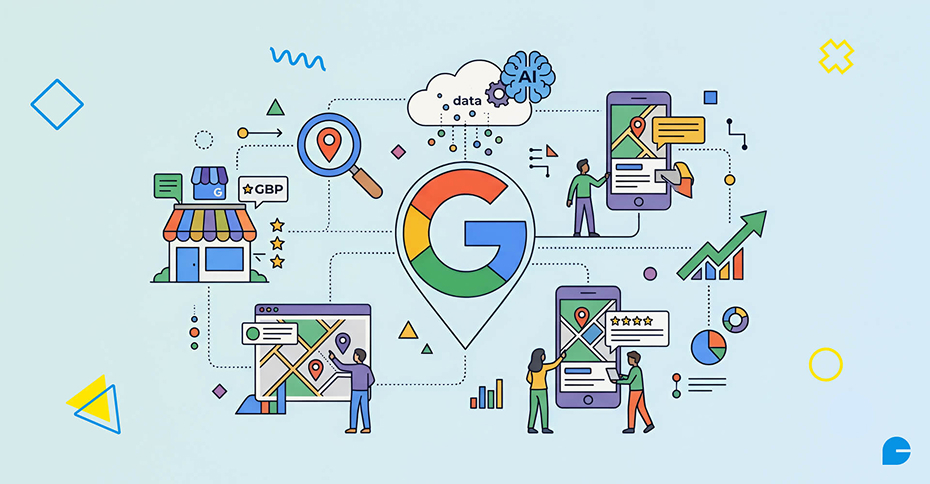
Why Google Is Doing This: The AI Data Layer Behind Local Search
This update is small in interface terms but significant in strategy. It confirms that Google Business Profile is no longer just a static listing you fill out once – it’s becoming a live, AI-maintained data layer. Google’s automated assistant is actively calling, texting, and messaging businesses to keep information current, then feeding that verified data into the systems that power:
- Local Pack and Maps rankings
- Google’s Knowledge Graph entries for local entities
- AI Overviews and AI Mode answers that recommend businesses based on service accuracy, hours, and matching intent
In other words, the accuracy (or inaccuracy) of AI-collected data can now directly shape whether – and how – your business shows up when someone asks Google or an AI-powered search experience, “Who’s open near me right now?” or “Which plumber handles emergency repairs in [city]?”
Also Read: How to Improve Google Business Profile Ranking for Better Local Visibility
How AI-Collected Data Could Change Local SEO
1. Verification signals are becoming a ranking input.
Local SEO has always leaned on consistency – matching NAP (Name, Address, Phone) data across the web. Now Google is generating its own first-party verification signal by calling businesses directly. A profile with fresh, AI-confirmed details may be trusted more than one that only shows manually entered, unverified information.
2. Errors can now originate from Google itself.
Automated conversations can cause errors when Google collects business information. Misheard responses or unclear answers may add incorrect details to your profile and affect how AI describes your business. The Collected Info tab exists specifically because Google acknowledges its automated systems “can get it wrong.”
3. AI Overviews reward businesses with clean, consistent entity data.
Google uses AI Mode and AI Overviews more for local searches. Businesses can improve visibility by keeping website schema, GBP details, and AI-collected information accurate and consistent. Mismatches between what’s on your website and what Google’s assistant collected by phone could quietly work against you.
4. Local SEO now requires ongoing monitoring, not one-time setup.
Because Google can update your profile through automated outreach at any time, “set it and forget it” listing management is no longer sufficient. Local SEO now means regularly auditing the Collected Info tab alongside your website’s schema markup and Google Business Profile posts.
Google Business Profile + Schema: Should They Match?
Yes.
Your website’s structured data and Google Business Profile should describe the same real-world business.
For a local business, relevant Schema.org LocalBusiness information may include details such as:
- Business name
- Address
- Telephone number
- URL
- Opening hours
- Service information
- Location information
Schema markup does not guarantee higher rankings or AI visibility. Its role is to help search engines understand the entities and information represented on your website.
The bigger goal is consistency.
Your website, Google Business Profile and other authoritative business references should tell the same story.

What Local Businesses Should Do Now
- Check the Collected Info tab weekly or monthly, if it’s available in your region and category.
- Verify the source and date of each entry before assuming it’s accurate.
- Delete outdated or incorrect entries immediately, then manually update the corresponding field in your profile.
- Brief front-line staff on how to handle Google’s automated calls/texts/WhatsApp outreach, since their answers can become public data.
- Align your website’s structured data (schema.org/LocalBusiness) with your Business Profile so AI Overviews and AI Mode pull consistent, matching information from both sources.
- Audit NAP consistency across your site, GBP, and directories – AI-verification only helps if the rest of your data already agrees.
Not sure if your schema and Google Business Profile data actually match? Talk to our SEO team about a full local SEO and AI-readiness audit.
GEO + Local SEO: Why This Matters Beyond Google Search
This update is a clear signal of where local search is heading: Google is training its AI systems on verified, conversational data, not just static listings. The same principle applies to Generative Engine Optimization (GEO) – AI tools like Google AI Overviews, ChatGPT, and Gemini favor businesses whose information is accurate, structured, and consistent everywhere it appears. Treating your Google Business Profile as a live data feed – rather than a one-time form – is now part of being visible in AI-driven local search.
Conclusion
Google’s new Collected Info feature gives eligible businesses greater visibility into information gathered through Google’s automated calls, texts and WhatsApp interactions.
It does not establish Collected Info as a standalone Google ranking factor. However, it highlights the growing importance of accurate, consistent and up-to-date business information across Google Business Profile, websites and other digital sources.
For businesses investing in Local SEO, AEO and GEO, the practical takeaway is straightforward: monitor your Business Profile, review collected information, keep your website data consistent and make sure your business entity is clearly represented across the web.
Your Google Business Profile is no longer something to create and forget. It should be treated as an active part of your overall search visibility strategy.
FAQs
1. What is Google Business Profile’s “Collected Info” feature?
It’s a dashboard tab that shows business owners the details Google’s automated assistant gathered through phone, text, or WhatsApp outreach, with an option to review the source, date, and delete inaccurate entries.
2. How does Google collect this business information?
Google may contact the verified phone number on a Business Profile using automated calls, texts, or WhatsApp messages to confirm details like hours or services; responses can be used to update the public profile.
3. Is the Collected Info tab available to every business?
No. Google states the feature is currently limited to select regions, languages, and business categories, and is being rolled out gradually.
4. Does deleting collected info change my live Business Profile?
Deleting an entry removes it from Google’s internal record but does not automatically update other details already published on your profile – those must be edited manually.
5. Why does this matter for local SEO?
It signals that Google is using AI-verified data as a trust and accuracy input for local rankings and AI-generated answers, making profile monitoring an ongoing part of local SEO rather than a one-time task.
Is Your Local Business Actually Visible to AI Search?
Google is now verifying business data through AI – and every inconsistency between your website, your Business Profile, and what Google’s assistant collects can cost you visibility in Local Pack results and AI Overviews. InCreativeWeb can audit your Google Business Profile, local SEO, website structure, and schema markup to find issues that may affect search visibility.
Our SEO approach combines Local SEO, AEO and GEO to build a clearer and more consistent digital presence. Want to know how search engines and AI platforms see your business? Talk to InCreativeWeb’s SEO Services team for a Local SEO & AI-readiness audit.
Author
Jayesh Patel
Jayesh Patel is a Professional Web Developer & Designer and the Founder of InCreativeWeb.
As a highly Creative Web/Graphic/UI Designer - Front End / PHP / WordPress / Shopify Developer, with 14+ years of experience, he also provide complete solution from SEO to Digital Marketing. The passion he has for his work, his dedication, and ability to make quick, decisive decisions set him apart from the rest.
His first priority is to create a website with Complete SEO + Speed Up + WordPress Security Code of standards.